Category: MVP

  • Dhruv Deshpande’s journey to a first national tournament


    “Cricket was where I got serious. I hated losing,” Deshapande said as he shared the story of his cricketing life.

    Written by: Tejas Rao

    Dhruv Deshpande, a sophomore at UW-Madison studying Computer Science and Economics, decided to not let go of his childhood talent and dream after coming to university. “I always wanted to play cricket, even if it meant semi-professionally, and that’s what led me to the BCC,” he said.  

    The Badger Cricket Club (BCC), founded in 2023, was the main spot for cricketing enthusiasts in UW-Madison to come show off their talent. It was also the only ticket to making an official university team that goes out and plays tournaments. Deshpande did not hesitate to find out the cricketing opportunities he had and joined the club just weeks after reaching Madison. 

    Even though he missed out on the first round of try-outs to make the team in the first semester at Madison, his performance in the weekly indoor tennis ball sessions – that were open to anyone – caught the eye of the seniors in the main team. “Most people came to play for fun, but Dhruv was clearly more invested and looked good out on the floor. So we decided to add him to our main squad,” BCC president Ayush Mehta said. 

    By his second semester as a freshman, he was playing with the official leather ball that cricket is played with professionally and in just a month he had proved his worth to be in the travelling squad to his first-ever rivalry tournament — a tri-series matchup between the BCC and the University of Minnesota-Twin Cities cricket club. 

    Over the three matches in his first-ever regional tournament, he took a total of 5 wickets in 9 overs bowled, and showed that putting him on the field as a bowler would guarantee the team at least a wicket per game. “He is definitely an asset and I’m sure we made the right decision adding him to our squad,” Mehta said post-tournament.   

    “I was definitely excited to make that starting eleven, but I know from my end that it took months of work to show my worth to a team of seniors and juniors that have been here for years,” Deshpande admitted. 

    As a child, he was always yearning to play. Unless the sky got dark or school work was hindering him, you’d always find him out in the field practicing. “He was almost never to be seen if it was a weekend or holiday,” his father, Guru Deshpande, exclaimed. “Only came in for meals or if cricket matches were playing on the T.V.” 

    In his schooling years, the highest level he achieved was playing at an intra state-level called ‘zonals’, representing his district throughout middle school. “Playing zonals was some of the best days playing cricket and the aim was always to make it to a state level.” When asked about his mindset, even at a young age, he said, “I of course played other sports but it didn’t matter that much to me if I lost. Cricket was where I got serious. I hated losing.” 

    Fast forward just 3 years and he made his dream a reality, ready to come out onto the field to face the other cricket clubs of mid-west universities. The Collegiate Cricket League’s (CCL) Regionals in October of this year was where he got his first taste of playing for a big trophy and a qualification to the CCL nationals. 

    Although the Badger Cricket Club lost their first match of the tournament, they bounced back with two wins to make the semi-finals against the University of Michigan. As they hit boundaries after boundaries, the Badgers needed to break their momentum by getting crucial wickets and getting their good batsmen out. Deshpande was having a decent tournament performance so far, getting wickets in previous matches consistently, but he found his moment to shine in this match. 

    As he stepped up to bowl his first over of the match, he got two wickets in the same over, getting the high-rated Michigan batsmen out early into the game. No doubt a crucial cog in the entire BCC machine, he went on to bowl extremely well in the finals against Ohio State and kept their batsmen at bay. 

    He had done it. “Losing the first match, we never thought we would win the regionals,” Deshpande said.

    Winning the regional championship for his club and his university and getting that golden qualification ticket to the CCL Nationals coming up in March of 2026. “I never felt anything like it so I didn’t really know how to react but I knew that this was something I wanted to keep doing.” 

    The journey to a national-level tournament was completed and a new one began in that instant — winning his first-ever national trophy was the ultimate prize now. “Winning the regionals felt good since this team hasn’t won in a couple years, but I wasn’t fully satisfied with it. The nationals is something I feel would complete the feeling of winning.”

  • Remember the Name: Alvaro Folgueiras is Coming

    By Miles McCanles

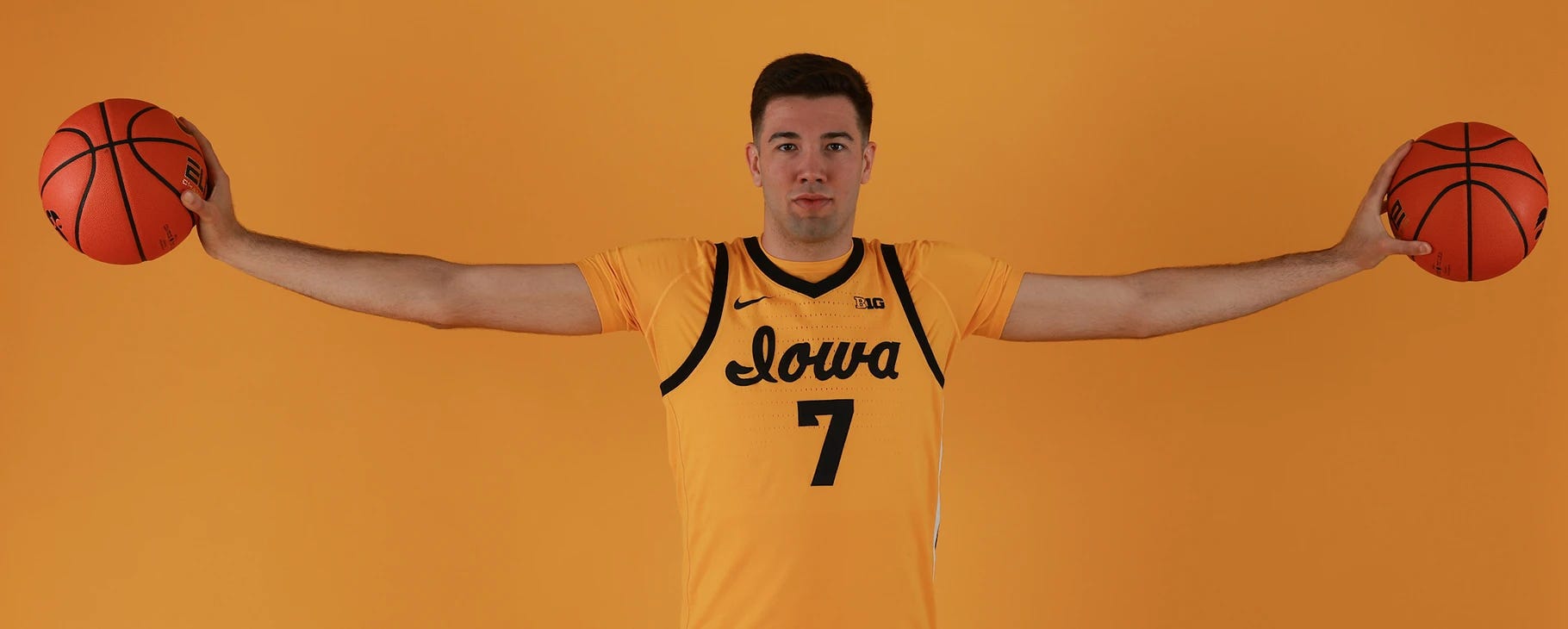
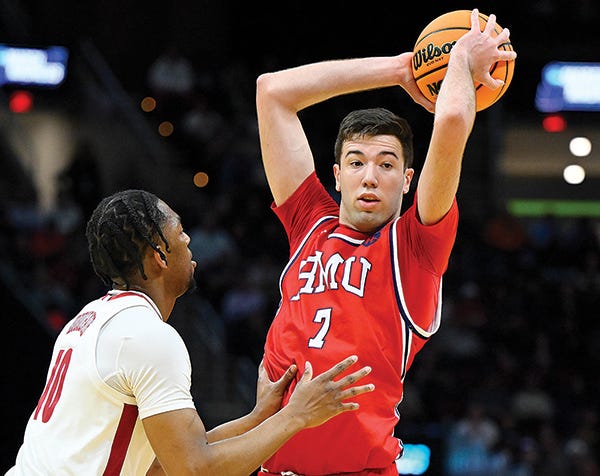
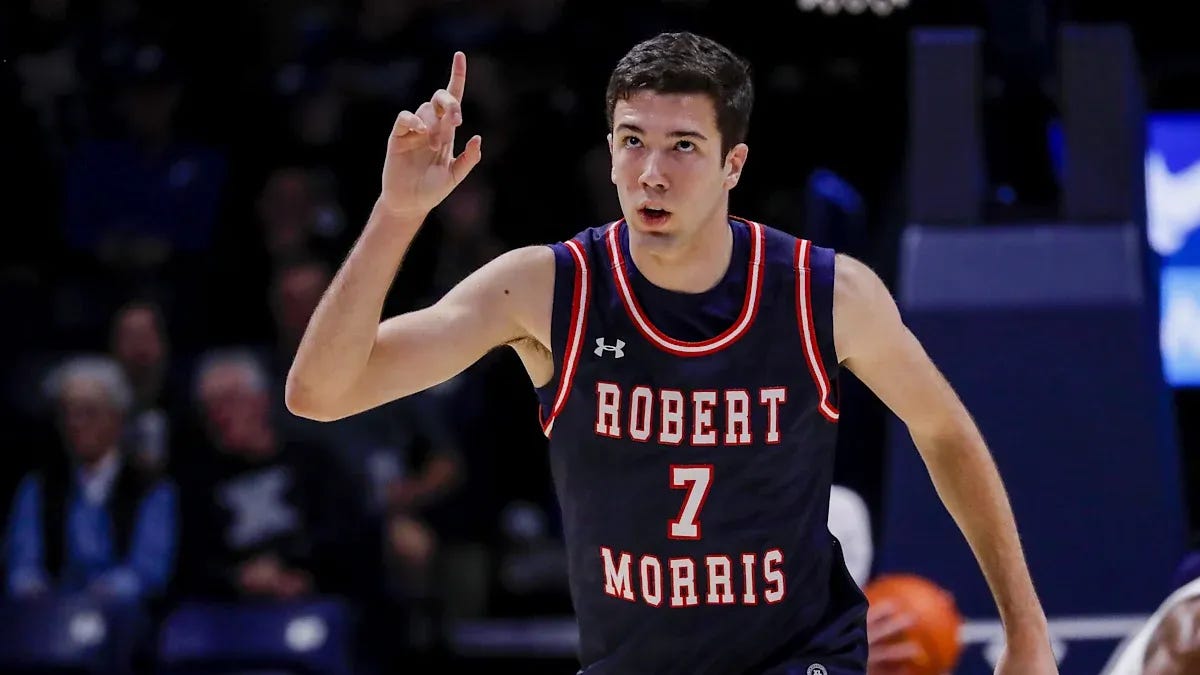
    At 6’9 and 215lbs, Alvaro Folgueiras burst onto the scene this past season. After a quiet freshman campaign that saw the Spaniard play just 44% of his team’s minutes, Alvaro’s sophomore season propelled him to win Horizon League Player of the Year and lead the Robert Morris Colonials to the NCAA tournament. By late March, Folgueiras would enter the portal, and to no surprise, he’d quickly become a coveted target. Just a month later, he had found a new home in Iowa City under first-year head coach Ben McCollum. With the Hawkeyes entering this new era, it’s clear that Folgueiras will need to be a key piece, and I believe he’ll answer the bell.

    Offense

    Folgueiras is a fluid and versatile offensive player regardless of his athletic limitations. While his role at Robert Morris led him to the second-highest usage rate on the team, he still has great off-ball ability, as shown by his success in both the pick-and-roll and spot-up scenarios. As Folgueiras now transitions into the Big Ten, the real question surrounds what role Alvaro can fit into. Will he continue to expand his perimeter game and ball-handling ability as a big wing? Or will he adapt his physicality level to that of the Big Ten and make plays out of the post as he did at Robert Morris?

    Shooting

    Alvaro can score from all parts of the floor and demonstrates a shot diet that is economical in basketball’s scoring economy. With close to 35% of his shots coming from 3 and 42% coming at the rim, Folgueiras earns his keep through the two most efficient routes. As a shooter, he demonstrates a quick trigger that comes in useful during the abundance of spot-up scenarios he sees. Shots off movement have seldom come Alvaro’s way, but his handle and mechanics are encouraging signs for it to be an added element. Looking at his overall three-point volume, Alvaro saw little change between his freshman and sophomore years at 7.2 and 6.2 3PA per 100 possessions, respectively. Regardless, Folgueiras still managed to significantly improve his three-point efficiency, increasing his freshman mark of 30% to 41% for the 2024-2025 season. It will be key to monitor if his jumpshot maintains this trajectory, but his smooth mechanics and free-throw efficiency (79%) may be indicators of continued success.

    Rim Scoring

    It’s no coincidence that, as 42% of Folgueiras’ attempts have come at the rim, the region is the centerpiece of his game. Alvaro can create out of all regions of the post and create an abundance of second chances for his team through offensive rebounds. Whether he’s facing up a defender and driving out of the high post or doing a classic backdown on the low block, he displays a myriad of ways to get the job done. Out of all of these made looks, 55% were assisted, making the other 45% result from unassisted creation. These numbers display a great balance between this self-creation, while also displaying play finishing that make his scoring adaptable to different lineups. While Folgueiras will play with an elite point guard next season in Bennett Stirtz, it will be key that he can create his own shot when Stirtz is off the floor. The numbers tell me he’s capable, even with the jump in competition.

    Playmaking


    Folgueiras is a high-level processor of the game that can identify advantages as he creates them. With his continued success in the post, he’s no stranger to drawing in extra defenders on the catch or the drive. Generating gravity with the ball in his hands is already a valuable skill, but what impresses me about Alvaro is how often he can anticipate these instances. Whether it’s kick-outs to a spot-up shooter, finding the cutter, or dumping the ball down to a teammate in the dunker’s spot, Folgueiras’ vision knows no bounds. Regardless, some concerns still arise. Even with an assist percentage of 21.9% which was only reached by 19 players who were 6’9 or taller, Folgueiras ranked near the bottom of that group in turnover percentage. At a turnover percentage of 19.9% and an assist-to-turnover ratio of just 1.4, Alvaro’s ball security was a bit underwhelming considering the mid-major competition he faced. With him only facing better competition going forward, this will certainly be an area to monitor.

    Defense

    I hold the opinion that defense is primarily a mental game. While athleticism and positional size certainly extend the range of skills a player can ultimately possess, scheme and motor are more than enough to form the numbers that make one a serviceable defender. Alvaro has the necessary motor, a rising star coach in Ben McCollum, and the added benefit of positional size, leading me to believe in his abilities as he jumps to high major ball.

    Stock Creation

    Defensive playmaking is an integral part of any good college defender’s game and a necessary trait for any NBA player’s survival. Alvaro more than passed the test in this category during the 2024-2025 season. With a steal rate of 2.8% and a block rate of 4.2%, Folgueiras was one of only twenty-nine players in the country to hit these thresholds. It’s true he didn’t wow many with his athleticism en route to these numbers, but he positions himself well to make plays on the ball, and that skill is invaluable. Positioning is a skill derived from one’s basketball IQ, and as Alvaro blocks most of his shots by staying vertical and using his reach, he’s clearly a smart defender.

    Positional Size

    As the tallest player on Robert Morris with an offensive game that had a heavy diet of post-ups, many would assume Folgueiras is just an undersized center. In reality, as he transitions into the Big Ten, that is far from the role he will need to play. Alvaro is a true stretch four that could easily fall into that “big wing” category with increased slashing and ball handling prowess on offense. Consequently, Alvaro should then be expected to guard opposing 3s and 4s and take advantage of the size advantage he has. At 6’9, he is in the upper echelon of wing sizes, and with a wingspan that appears to be a positive, Folgueiras can leverage his dimensions to bail him out in many cases where his foot speed and stance may be weak.

    Concerns

    Even as this report has spent much of its time covering the good things in Alvaro Folgueiras’ game, inevitably some red flags occur. As is the case with any player making the leap from mid to high major competition, weaknesses become even more apparent. If you can’t do x, y, z in the Horizon League, how can I expect you to figure it out in the Big Ten? This is not to say Folgueiras needs to be perfect, but rather that the margin of error is much smaller in his scenario. Nevertheless, I don’t foresee Folgueiras’ weaknesses to be the type of ones that cut him out of a rotation, but just ones that lead to an adjustment of his role. His lower physicality may just require him to carry a heavier perimeter role on both ends, while his limited athletic tools will only limit the range of players he can match up with defensively

    Role Projection

    Looking at Folgueiras’ Robert Morris film and statistics, he strongly resembled Danny Wolf to me. However, I think his role at Iowa will need to differ drastically from what Wolf’s was in his one year at Michigan. While Wolf was a 4 or 5 and the primary ball handler, Alvaro projects to be a 3 or 4 and the primary roll man.

    Folgueiras offensively will eat on the perimeter by hunting open space as a spot-up shooter, at the rim as a play finisher in the pick-and-roll, and as a playmaker through dribble hand offs and attacking the short roll. Overall, the role’s key difference is that it will likely pull him away from the heavy diet of post touches and turn him into a clear stretch four.

    On the defensive end, Folgueiras will choose the more favorable matchup between the opposing 3 and 4. The matchups will have to consider his slower foot speed and taller stance while playing into the strengths he has in his reach and rebounding ability. With true bigs like Oscar Cluff (Purdue) and playmaking wings like Andrew Rohde (Wisconsin) running around the Big Ten, Folgueiras will have to match up with an archetype between these two ends of the spectrum.

    My Thoughts

    I firmly believe Alvaro Folgueiras is an NBA prospect. With a great shot diet, the ability to create rim looks, and a three-point shot with even more room to grow, I’m very optimistic about his offensive game. The playmaking and defense are areas that I’m not sure I buy quite yet, but that’s exactly why I feel the jump to Iowa is good for him. If Alvaro can still create steals and blocks at a good rate in the Big Ten while maintaining his playmaking capabilities, I may be all in. He will still be the second-best prospect on his team (Stirtz) unless some other-worldly leap is taken, but I wouldn’t rule out Alvaro being a guy that could sneak his way into the end of the first round by the time we get to the 2026 draft.

  • She’s in the huddle: Madison West’s first-ever female coach

    Written by: Rachel Cohen

    Grace Cannizzo grew up loving sports. She noticed during fifth grade that every recess the boys would play soccer so one day, she told one of them she wanted to join. 

    He invited her in and she eventually became the only girl playing in a group of 40 boys. It wasn’t met with agreement from everyone and one of the boys would lash out, pushing her around and throwing punches at her. 

    But instead of letting that be her discouragement, she went on to invite more and more girls to come play until there were at least 15 girls who joined the soccer games played during recess. That same boy was so mad and stopped throwing punches because he was outnumbered. 

    Cannizzo laughed while telling this story because of how ridiculous it was that a boy would throw punches, but it taught Cannizzo a lesson early on. She learned she could hang with the boys and had the skills and knowledge to be a part of the games, the locker rooms and the broadcast booth just as much as any of the boys did. 

    Not only is Cannizzo a 20-year-old journalism student at the University of Wisconsin-Madison, but she is now also an assistant wide receiver coach for a high school football team. 

    At a time when women are continuing to break barriers in sports, Cannizzo is leading that charge as the only female football coach for Madison West High School

    “I’ve been watching football my whole life,” Cannizzo said. “I’ve been analyzing sports my whole life. I know I’m just as qualified as anyone else, even if they know more than me, I’m still qualified for the positions I have.”

    Growing up in New Jersey, Cannizzo was immersed in sports through her family’s love for Notre Dame football. She loved the environment, tradition, and bond sports brought. 

    “There isn’t a time in my childhood I don’t remember sports being a big thing in my family, specifically with my dad,” Cannizzo said. “He just kind of raised me that way.”

    That love of sports being in her life continued with her to college and ultimately led to her reaching out to the Madison West football staff. 

    “I’ve just been so into football my whole life,” Cannizzo said. “I’m sometimes that person that’s picking apart things. And I was like, you know, I feel like I’d actually enjoy this beyond just yelling at my television.” 

    She sent an email and went through an interview process with the Madison West coaches. They all clicked and by the end of winter, Cannizzo was added to the coaches email list. 

    Michael Vorlander, an offensive line assistant coach at Madison West said, “it’s unusual to see a woman on a football coaching staff, especially at the high school level.”

    He initially questioned how the 18-year-olds on the team would respond to having a female coach and how Cannizzo would coach considering she had never played football.  

    But, after meeting Cannizzo, all of his questions and worries went away. 

    “When you meet Grace, you realize that she knows ball,” Vorlander said. “She knows ball very well. She’s been watching it from a very young age, and she understands it more than a lot of these kids.”

    Besides learning all their names in the first week and blowing Vorlander “out of the water,” Cannizzo has developed a different kind of relationship with the players. 

    While they can jokingly call her “unc” (a slang term for being old) because she’s only a few years older than them, she also provides a different outlook on things.

    “I think that adds more of a relatability factor,” she said. “I’m pretty good at bringing situations down, de-escalating and also, yeah, with age, I think I’ve been able to help with things I can relate to more, even outside of coaching.”

    She’s also made a difference in the coaches. Not only has she changed their perspectives of women coaching, she’s also brought a new light to the team. While some coaches can be headstrong, Grace is more welcoming and friendly. 

    “She comes out there with full steam, with confidence, and you would have never second guessed that this girl has never coached a day in her life before,” Vorlander said. “We love having Grace around. She’s a blast. She lights up the room.”

    The running back coach Julius Starlin agreed that Grace brings a fresh outlook to the team. 

    “It’s just kind of really enlightening,” Starlin said. “You know, honestly, having a different perspective…she’s found a purpose and she’s found things that she can do to learn and benefit the team.”

    Whenever there’s a doubt, Cannizzo always comes back to her self motto: “If you know ball, you know ball.” 

    That is also something she tells her younger self, her current self and young girls who want to break into the sports world. 

    “Stop doubting yourself,” Cannizzo said. “I’m a big believer in following your heart as opposed to your brain. This is one where I think it’s very applicable, do what you want to do, and things will fall in place.”

  • Sean West’s rise seems to be more steadfast than improbable

    West, who grew up an avid Badgers fan is now playing – and thriving – on his childhood team.

    Written by: Jacob Szczap

    With his back facing the student section and the Wisconsin Badgers in a 4th-and-19 situation in the midst of a blowout, Sean West fielded a high snap standing on his own two-yard line. He gathered the football, lifted it to punt it and then did the unthinkable. With an open field to his right, 33 yards from his feet to the first-down marker, and an entire stadium expecting a punt, West took off running.

    West made the call to run himself, and he had no idea how much yardage he had to gain, figuring it was a 4th-and-5. But as he took off, he had almost the entire field fooled, and sprinted unbothered for 25 yards. 

    Ohio State safe-man Leroy Roker III, the one player who didn’t take West’s bait, closed in on him at the 27 yard-line, but West was able to shake off the tackle, made another Ohio State player miss, and stumbled his way to a first down. 

    The uncalled fake punt was the Badgers’ only positive moment of the game, making it the most memorable and is indicative of West’s role in Wisconsin’s season as a whole — a bright spot shining through a year that had its fair share of struggles.

    Fast forward a couple months, the Badgers finished the season 4-8, their worst mark in 35 years. There were low points, like losing to Maryland at home, and then getting bludgeoned to two consecutive shutouts by Iowa and Ohio State. But players like West — young, successful and hungry, show that there is reason to believe that Wisconsin’s fortunes can turn around. 

    West, who comes from in-state Mequon, brings the passion of a kid that spent a childhood dreaming of playing for the Badgers. Head coach Luke Fickell described him as a player, “that is dying to be here.” 

    He was raised a Badgers fan, and regularly attended games with his family at Camp Randall throughout his childhood. “I always wanted to go to Madison, it was my number one dream school,” West told the Cardinal. “I had pictures of Wisconsin football in my room as a kid.” 

    Throughout his youth, he had always been a good athlete, excelling in soccer, hockey, and lacrosse, in addition to football. In middle school football, he played a variety of positions, including quarterback, defensive end and linebacker, but he made the most impact with his leg. 

    “From playing soccer when I was a kid, I knew I had a decent leg,” West recalled. “So I kind of just went and tried out for kicker.” 

    He, and others, soon discovered his leg was more than decent. 

    “Nobody would expect a middle school kid to be able to kick the ball that far,” Drake Zortman, West’s head football coach at Homestead High School, told the Cardinal. “He would kick off, and then the (opposing) team would have to turn around and run backwards to get it.”

    West progressed through the youth ranks, and by his sophomore year, he was named Homestead’s starting kicker and punter, where he initially struggled. 

    In his junior season, however, things changed. West went four-for-four on field goals, and was quickly making a name for himself in the state’s prep kicking circles. 

    “He did nothing but get better,” Zortman said. 

    Realizing his potential, West devoted the summer following his junior year to perfecting the craft of kicking. He started traveling throughout the country to participate in kicking and punting camps, where he developed skills and began gaining notice from college recruiters. 

    Still, West operated largely from under the radar. Heading into his senior season, he had received interest only from Division II and III schools. By the end of his season, it looked like if West wanted to play high-level college football, it would have to be over 15 hours from home, as Wyoming was the only Division I school to offer interest. 

    But two nights before he was set to fly out to Laramie for a visit, Wisconsin special teams analyst Spencer Rymiszewski gave West a follow on Twitter and invited him to Camp Randall for a game visit that weekend. Although he had had the Wyoming trip planned for weeks, West exuberantly accepted Rymiszewski’s invitation. 

    “I was kind of freaking out,” West said. 

    In a drastic change of events, West was suddenly being recruited by his childhood team. But after the visit, months went by without West hearing any more word from Madison. He eventually contacted Wisconsin punter Gavin Lahm, who told West that Rymiszewski had accepted a position at Kent State. From there, West got back in touch with Wisconsin. He went on an unofficial visit in April 2023, and days later, when offered by assistant special teams coordinator Eric Raisbeck, West committed on the spot. 

    As the reality that West had fulfilled a childhood dream set in, West also immediately realized that he would have to double down on the same principles that brought him to Wisconsin — hard work and a commitment to excellence. 

    West spent his freshman season in Madison buried in Wisconsin’s special teams depth chart, and struggled with the adaptation to a smaller role on a team. 

    “When you come to college as an athlete, you have dreams of beating people out and playing your first year,” West said. “But last year, I didn’t have a great year, punting wise.”

    While he didn’t see the playing field, being a part of a program he grew up idealizing lit a match to a deep desire for success that was already fueled. 

    “I remember just going down the hallways, (seeing), the legends that have played here, like JJ Watt, all those guys,” West said. “I was always so jealous of them, and wanted to be like them.” 

    Heading into this season, his redshirt freshman year, West didn’t expect to play, with emphasis on continuing to improve physically and mentally. But he had a great fall camp, found consistency in his punting and caught the eyes of the coaching staff. 

    His progress continued throughout the season, and with the Badgers reeling in mid-October, West was told he was going to receive some in-game action. His first appearance came in the aforementioned Ohio State game. 

    “I was shaking quite a bit,” West said. “Being on the field for the first time didn’t feel real at all.” 

    After his first punt though, he settled in nicely, and found enough confidence to pull off the fake punt, a play most players wouldn’t dare execute on their own. West became a beacon of hope for Wisconsin fans, and became a crucial part in the rest of Wisconsin’s season. 

    He took three punts in Wisconsin’s next game against Oregon, and a week later at home vs then No. 21 Washington, etched his name further into the college football zeitgeist. 

    Trailing 10-3 in the third quarter, West completed his second fake punt in his first three games as a Badger. The playcall was planned this time, but West almost missed the call. 

    The Badgers thought they could exploit Washington’s punt coverage, and called a play that featured West pulling back on the punt and passing the ball. But West wasn’t sure if he heard the playcall correctly, and had to yell out to Aaron Witt to double-check. At the last moment, Witt confirmed the fake.  

    West then found tight end Jackson Acker wide open in the middle of the field for a 24-yard first down completion. The play brought an energy to Camp Randall that would eventually carry Wisconsin to its first Big Ten victory of the year, and the first ranked win of the Fickell era. 

    On a snowy afternoon where running the ball took priority, West, with his 24 passing yards finished the game as Wisconsin’s leading passer, drawing national attention. 

    Though West introduced himself with the stunning dash against Ohio State, and told the college football world he was sticking around with his play against Washington, it has been more than just his knack trickery that propelled him to becoming Wisconsin’s first punting option. 

    In his six games, West has been good for 47.7 yards per punt, 11th best in college football. He had 14 punts that travelled 50 or more yards. 

    “Sean has just shown us over and over again on a consistent basis that he’s got a really, really good leg,” Fickell said.

    With fellow punter Atticus Bertrams announcing he has entered the transfer portal, West appears to be heading into next season as Wisconsin’s starting punter. It marks a continuation of the upward trajectory West has been on since his days as an athletic middle-schooler known for his leg. 

    West remembers looking out at the Camp Randall field a few years ago, telling his sisters how badly he wanted to play on it. Now, he’s in the position he envied, and while ecstatic about it, he’s not close to being satisfied.

    “I want to be considered one of the greats, one of the best to come out of Badger football,” West said.

    With his rapid journey from fan to foundational player, West’s story may evoke a sort of underdog tale. But his sheet talent, paired with unwavering commitment to his craft, and the place he grew up dreaming of, point to his rise being more steadfast than improbable.

  • Cheerleader by Day, Bartender by Night

    By: Taylor Larsen

    It’s bar close at Whiskey Jacks Saloon on State Street, and the floor is sticky. Security is pushing out the last group of people who swear they “know the owner.” The music is still blaring for how late it is, and behind the bar, UW cheerleader Shayla Schulz is doing dishes and wiping down the counter where multiple drinks were spilled.

    Most students go to the bars to escape the stress of college. Schulz clocks in. And she does it knowing she has to be at lift at 6 am.

    Schulz is living a double life that most students wouldn’t survive a week. At Wisconsin, she is a D1 cheerleader who spends her mornings tumbling, lifting, stunting, and spending hours in Camp Randall, the Kohl Center, or the Field House supporting the Badgers. But she’s also a bartender at one of Madison’s busiest student bars, working nights that can stretch until 4 a.m., long after her classmates have gone home. Her teammates joke she’s insane. She usually agrees. 

    Shayla didn’t grow up thinking she’d be this person. She was a dancer before anything else. Cheer came after COVID when she was entering high school, trying to figure out how to socialize again, and tried out for her school’s team, just hoping to find something that felt normal. 

    She ended up being good at it. Then better than good. She grew up going to Badger games, so Wisconsin was always her dream school. Eventually, cheering at Wisconsin became a real possibility. Now she’s here, and she’s paying for it in more ways than one. 

    A typical day for Schulz is a puzzle of timing and sacrifice. She’s out the door at 5:30 a.m. to get to weight training. Classes take up her entire midday. She fits homework and chores into random windows of time…when she’s lucky. Evenings are either practice, home games, or shifts behind the bar. 

    “I’ve had to find routines and certain times of the day to do certain things, otherwise they simply won’t get done. Some days I just have to sit and decide what can wait because I don’t have enough hours in the day,” she said. 

    There is nothing glamorous about it. She rarely gets eight hours of sleep. Six is the bare minimum. She forces herself to take at least one night a week to do things normal college students do, like hanging out with her roommates and friends, watching movies, or going out.

    People don’t understand what NCAA cheer actually is or demands. 

    “I truly don’t think people understand how much time and dedication is put into cheer alone. We have 6 am lift, then three-hour practices, and we have to attend every single home women’s basketball game, men’s basketball game, volleyball game, and football game. Then on top of that, traveling to represent the school when teams make it to postseason tournaments,” Schulz said. 

    That doesn’t even include the physical toll. Tumbling and stunting are extremely high-impact. In the Field House during practice, the sound is sharp. Sneakers squeaking hard against the mat, bodies hitting the floor, spotters yelling quick counts. Chalk dust hangs in the air, and the music is always too loud. It’s not cute. It’s a contact sport disguised in bows and rhinestones. There is no room for error when a person is being thrown twenty feet in the air. “Every single practice people are falling off pyramids twenty feet in the air is prone to injure someone,” she said. 

    One manager who works with her remembers a night after a home football game when they were closing down Whiskey Jacks. Schulz finally sat down at the bar, and she looked exhausted. “She said she just needed a minute because she had done 56 standing back tucks during the game before her shift. That was apparently the most she’s ever done in a day,” her manager said. 

    Schulz doesn’t take on all of this just to say she’s busy. She does it because she’s thinking past college. In the future, she is hoping to attend law school, and in order to do that, she needs a high GPA and a stacked resume. She wants to set herself up so she can be a successful adult after college. 

    “My biggest motivator is thinking the better my GPA and the more I involve myself in now, the more it will pay off,” she said. 

    She doesn’t want her life to peak at Wisconsin, she wants it to be where she began. 

    There’s something incredible about the difference between who she is at 2 a.m. and 6 a.m. At night, she’s serving shots to students who only care about the next round. In the morning, she’s standing in the weight room training like a real athlete in one of the biggest athletic departments in the country. 

    She knows this chapter won’t last forever. After graduation and ideally law school, she eventually wants to move out west. This is the chapter of her life where she’s figuring out what she wants and testing her limits. She does this not because she has to prove anything to anyone, but because she’s curious what she’s capable of. 

    “I would say that juggling both roles changed the way I see myself by helping me realize I truly can do a lot more than I thought I was capable of. I sometimes don’t know how I do it, but for the most part, I juggle and handle all of my roles and responsibilities well,” she said. 

    Someday she’ll leave the bar shifts and the sidelines behind, but she’ll always know she built herself here. In the late nights, early mornings, and everything in between.

  • The 4’10” Maestro: How Krystal Medina Quietly Controls The Game

    by Tatum Fisher

    On a gray New England afternoon, the first thing anyone noticed was how small she looked. A girl barely five feet tall stepped onto the “Field of Dreams” at Pomfret School, surrounded by towering pines, a sharp fall wind, and a team of players she barely knew. She didn’t say much that first day. She didn’t have to.

    Within minutes, the ball drifted toward her as if she’d willed it there. She checked her shoulder once, twice, and in one clean touch, she slipped a perfect through-ball between two defenders. A teammate took off after it. Conversations around the field paused. Attention shifted her way.

    “I swear it was immediate,” Pomfret girls’ varsity head coach Erin Fisher said, still sounding a little stunned. “She’s the kind of special player you might get to coach once or twice in your lifetime. When she stepped on that field, she just took it. She didn’t do it loudly. She didn’t demand the ball. But she controlled the entire game.”

    Fisher smiled as she recalled the phone call that brought this quiet playmaker to Connecticut.

    “Coach Amphone told me, ‘Trust me, she’s a maestro on the field. A 4’10” Messi.’ And he was not wrong.”

    The girl they were talking about, suddenly center stage, was Krystal Medina, a multi-year varsity captain from Corona, California, the daughter of Mexican immigrants, and now a freshman midfielder at Columbia University. Back then, she was just 17, frightened, far from home, wondering if she’d made a terrible mistake. At five-feet-nothing, she didn’t look like the player who would run a match. But she is exactly that.

    She always has been.

    Small, but never small in presence

    Medina laughs about it now—the nickname that followed her through high school, courtesy of a teammate who blurted it out in a newspaper interview: “four-foot mini-Messi.”

    “When I saw it, I genuinely laughed,” Medina said. “It was kind of shocking to hear out loud like that. But I guess my height gives me a lower center of gravity, so maybe it makes sense.”

    Her style of play backs up the nickname more than she ever would. At Santiago High School in Corona, Coach Mike Fleming watched opponents build entire scouting reports around stopping her.

    “She was the motor of our midfield,” Fleming said. “She took us wherever we went.”

    He still remembers how absurd it felt when every opponent seemed to double-team her, sometimes even triple-team her, yet the ball never left her feet for very long. 

    “The other team’s focus was always on her: put someone on her, limit her ability to impact the game,” Fleming said. “But she still always found a way to stay on the ball. And it was never about her stats. She just wanted everyone else to score.”

    That last part, more than her balance, more than her touch, more than her vision, is what everyone around her sees first. Medina doesn’t want the winning goal. She wants the pass that no one saw coming.

    “I really pride myself on giving the final ball through,” Medina said. “I enjoy it more when my teammates score. That feeling of helping make something happen means more to me than taking the shot.”

    She smiled as she said it, the kind of smile that suggests she means every word. Her whole style is built on connection: on making others look good, on helping the team find something bigger than the box score. 

    It’s the smallest person on the field who reads the game at its widest angle.

    Underestimated, over and over again

    The same qualities that make Medina unique, quiet leadership and small stature, have made her easy to overlook. During the college recruiting process, Medina recalled a coach who fully stopped communicating with her because he “couldn’t invest that amount of scholarship money into a player of her height.”

    “It was definitely an eye opener,” Medina said. “I think a lot of coaches underestimated me because of my height.”

    She paused. No bitterness. Just memory.

    “But I ended up somewhere much better suited for me.”

    That “somewhere” didn’t come easily. No one in her multi-generational household in Corona had ever talked about boarding school, let alone a post-grad year spent 3,000 miles from home. There is no blueprint for a first-generation student navigating college sports recruiting.

    “When Coach Amphone called and suggested it, I didn’t even know what a post-grad year was,” Medina said. “We had to research it as a family. It was scary because nothing was guaranteed. Everyone else seemed to have a plan already. Mine fell through. I just had to hope it would all work out.”

    There were plenty of unknowns, but one thing felt certain: she had worked too hard to turn the opportunity down. Her family was determined to support her, even if the path was unfamiliar.

    “Everything I do is because of them,” Medina said. “I just want to make them proud.”

    That is her biggest why. Not height, not scholarships, not a newspaper nickname. Family.

    Connection as superpower

    Medina plays the game the way she approaches relationships: patiently, attentively, and with a desire to elevate the people around her. Before she ever trusts her voice, she listens. Before she takes control, she learns who someone is.

    “I try to really form connections off the field,” she said. “So on the field, we already understand each other.”

    This explains why her teammates often feel her influence even when she isn’t talking much. Fisher noticed it instantly at Pomfret.

    “Despite consistently being one of the best players on the field, she was also one of the most humble and gracious players,” Fisher said. “Never seeking the spotlight. Always lifting teammates up. She modeled the way.”

    At Columbia, Medina is the same. She listens before directing and observes before stepping in. She cracks jokes when she’s comfortable, keeps practices light, and works to understand how others play so she can elevate them.

    Her passes aren’t just technical reads. They’re acts of recognition.

    A city that once lived on her phone screen

    As a kid, Medina set a photo of the New York skyline as her phone wallpaper. She wasn’t thinking about recruiting or college yet; she just loved the city. 

    So when Columbia began recruiting her, the academics surprised her. The location didn’t.

    “I had no idea Columbia was an Ivy League,” she admitted, laughing. “When I told my family, my mom and brother kind of freaked out because of how good it was academically.”

    She wasn’t chasing prestige. She was chasing a place she’d been looking at since she was ten.

    Now she rides buses past buildings she once saw only on a screen, explores neighborhoods on her free days, and walks through the city not as an outsider dreaming of it, but as a student living in it.

    Some people shrink in New York. Medina treats it like another field to read.

    A freshman finding her voice

    Her first Division I preseason nearly cracked her confidence. 

    “The speed of play was so much quicker,” she said. “The players are stronger, faster, smarter. I remember calling my mom and saying I didn’t know if I was made for it.”

    The doubt didn’t push her away from her goals; it clarified them.

    “My goal is to make an impact on this program,” Medina said. “Not just on the field, but in culture. I want to leave a legacy. Whether it’s through play, or relationships, or how I carry myself, I want the program to be better when I leave.”

    Even her definition of legacy is team-centered.

    Building beauty

    When Fisher called Medina “the kind of special player you might get to coach once or twice in your lifetime,” she wasn’t talking about goals. She was talking about beauty, the kind you don’t notice until you realize the whole match has been rearranged.

    “She exemplified the word beautiful in the beautiful game,” Fisher said. “She brought out the best in her teammates. Everyone around her got better.”

    When Fleming said Medina was “the motor,” he meant she wasn’t noisy or obvious. She was the reason things moved.

    And when Columbia assistant coach Amphone Keovongmanysar said she was “a 4’10” Messi,” he wasn’t describing her skills. He was describing how she sees the game.

    It’s creative. It’s patient. It’s crafty. It’s quiet. But quiet does not mean small.

    “Maybe people underestimate me because of my height,” Medina said. “But I don’t know. Everything has worked out. Your journey is your own. It’s not supposed to look like anyone else’s.”

    In soccer, a playmaker is measured by what they help others do. By that measure, Medina might be the biggest player on every field she steps on.

    She’ll probably laugh when she reads that. She’ll probably shrug it off and pass the credit forward.

    Because that’s what maestros do.

  • Finding the sweet spot: How UW–Madison Club Tennis helped Jonathan Kim fall back in love with the game

    by Abigail Bures

    On a sunny November morning at Nielsen Tennis Stadium, the sound hits first: the sharp pop of a clean forehand, the quick squeak of shoes on a freshly swept court, the breathy chorus of ‘Let’s go!’ echoing off the rafters. It’s the third weekend in November, the start of the Badger Classic; a tournament that is one of only two each semester. For many athletes, it unlocks the competitive spark they’ve tucked away during long stretches of optional practices. 

    Near court seven, Jonathan Kim stands with his racket tucked under one arm, surveying the scene. A third-season player studying computer and data sciences, he has become a quiet anchor on the team, someone who understands both the thrill and the cost of competition. Today, he looks relaxed, the way someone looks when they enjoy playing. 

    “This is the most fun I’ve had playing tennis because it’s a good mix of that team-friendly environment, but also there is still a competitive aspect to it,” Kim said.  

    Kim’s journey with tennis began when he was just four years old. His father played, and Kim followed with the earnestness of a kid who wanted to be part of something familiar. At first, the sport was simple; just movement, sunlight and the satisfying thwack of a ball hitting strings. But, sports have a way of escalating quickly. 

    By middle school, he was traveling around Wisconsin for tournaments, often playing singles matches that increased the weight of expectation. 

    “That’s the most intense I took tennis, I would say,” Kim recalls, “It was also the period of my life where I started to not like tennis cause I was getting super burnt out.”

    Singles, in particular, sharpened the isolation. Without a partner to talk to in between points, Kim felt the emotional swings more intensely. He remembers the heaviness of losses long after the matches ended. 

    “The feeling that I got from winning a match did not outweigh the feeling I got from losing a match,” Kim said. 

    Katherine Wahr, a teammate of Kim’s, had a similar experience with singles. 

    “If you’re playing doubles, you get more team energy,” Wahr said, “(For singles) It’s just you.” 

    High school softened things. A chance to play doubles created an entirely different relationship with tennis — lightness, shared responsibility and a sense of bonding Kim hadn’t felt before. Practicing on a team, traveling with friends and joking around on the baseline between drills were pieces that made the sport feel communal instead of lonely. 

    These connections followed him into his college decision. Kim thought briefly about playing varsity tennis, but he quickly realized that the schools recruiting him didn’t align with the academic path he wanted. He chose UW–Madison instead, knowing the University’s Club Tennis Team existed but unsure how he’d fit. 

    Kim explained that the high school coaches understood. They knew how important balance was for him, how burnt out he had been during his most competitive years and how much he valued the idea of a traditional college experience. Club tennis seemed like the right middle ground, competitive enough to stay sharp but flexible enough to be enjoyable. 

    Still, arriving on campus brought a different kind of challenge. During his first semester, Kim attended practices sporadically. The team was large, and everyone already seemed to know one another. 

    “I wasn’t used to club tennis, and I didn’t know where I fit it,” Kim said. 

    Optional practices twice a week meant that attendance varied, and newer players sometimes slipped through the cracks. While Kim liked the idea of the team, he just hadn’t found his place yet. 

    That changed during a tournament trip to Boulder, Colorado; a turning point Kim still talks about years later.

    On that trip, he felt the team’s culture in full force; late nights playing Mafia in cramped hotel rooms, laughing until the early hours and learning everyone’s quirks and senses of humor. The shift was immediate and dramatic. 

    Before the trip, he barely knew the names of most players. Afterward, he felt woven into the group. This mattered more than any win or loss that weekend. 

    “I always look forward to playing competitions, because it’s not as frequent,” Kim said. Boulder showed him that tournaments weren’t just competitive outlets, they were social ones too. They were where the team came together. 

    Three years and six tournaments later, Kim has grown into one of the most steadying presences on the roster. New players today don’t see the hesitant freshman who used to slip out of practices unnoticed. They see someone who understands the challenges of joining a large, competitive club and who actively works to ease the transition. 

    Now, when Kim notices freshmen standing along by the bleachers or hovering near the courts without a partner, he steps in without hesitation. 

    “Forming that group of people that are all going through this change at the same time is crucial,” Kim said. He introduces new players to one another first, letting them build early bonds, and then gradually brings them into the larger group of returning members. 

    Bit by bit, he helps them find the footing that took him a semester to discover. 

    Club tennis, unlike varsity, gives players permission to scale their commitment up or down depending on the week, the workload or the emotional bandwidth they have available. The flexibility is built into its DNA. Some players attend every practice and travel to every tournament, and others show up when they can and still feel welcome. 

    “You can tell that he cares about the team and the tournaments,” Wahr said.

    For Kim, that range is precisely what keeps him grounded. The spacing between tournaments helps keep the sport from overwhelming him the way it once did. Optional practices ensure Kim and other players remain engaged without slipping into burnout. 

    Club tennis gave Kim something he didn’t know he needed: the permission to enjoy the game on his own terms. 

    What matters most to Kim now isn’t just the tennis itself, it’s the community. The late-night conversations in hotel hallways, the inside jokes during warmups and the way players shout encouragement from the balcony during tight matches. 

    From all of this, Kim wants to pass down one key thing: the understanding that club sports are a choose-your-own-adventure. Players can be laid back or fiercely competitive, or a mix of both. They can build the experience they want — one not dictated by rankings, scholarships or performance pressure. 

    “Overall, it’s a super fun environment,” Kim said, “Strongly recommend.”

    On tournament days like the Badger Classic, when teammates circle the courts in red and white, and the air buzzes with equal parts nerves and excitement, Kim moves easily among them, laughing, cheering, encouraging. He looks nothing like a kid who drove home from tournaments weighed down by the sting of a loss. 

    Kim looks like a player who rediscovered the joy in a sport he once feared he’d lost, and he’s doing his best to share that joy with others. 

  • J.J. Spaun’s 64-Foot Redemption: The Long Road to a U.S. Open Title

    by Jack Behler

    PITTSBURGH ~ The ball rolled for what felt like forever, cutting across 64 feet of soaked Oakmont green. The gallery leaned in, holding its breath as the putt twisted toward the hole. When it dropped, J.J. Spaun didn’t roar. He exhaled. He didn’t pound his chest. He wiped his face, hugged his caddie, and let the moment wash over him.

    It was the most unlikely victory of his career, the 2025 U.S. Open, but the putt was only the punctuation. The real story had been written years earlier, in quiet gyms, lonely ranges, and doctors’ offices where answers came late.

    A body that betrayed him

    In 2018, Spaun’s body began to unravel. Fatigue, weight loss, and erratic play turned his season into a slog. Doctors first diagnosed him with Type 2 diabetes, a label that didn’t fit. The treatments didn’t help. His energy continued to dip, and his performance followed.

    By 2019, Spaun had fallen outside the top 200 in the world rankings. He missed more cuts than he made. Sponsors faded. Confidence eroded. For a player who had once been Mountain West Player of the Year and a rising name on the Korn Ferry Tour, the fall was steep and quiet.

    He didn’t make excuses. He didn’t make headlines either. He just kept showing up: to the range, to the gym, to the next tee box. There were no viral swing videos, no dramatic press conferences. Just a slow, stubborn refusal to quit.

    The long climb back

    Spaun’s breakthrough came in 2022 at the Valero Texas Open, his first PGA Tour victory. It was a relief, but not a turning point. Two missed cuts would then follow one win. The climb back wasn’t far from linear.

    By 2025, though, something had shifted. Spaun posted top finishes at The Players and the FedEx St. Jude Championship. He earned a spot on Team USA for the Ryder Cup. The team format didn’t show him much love, but he was undeterred. He wasn’t chasing validation anymore. He was chasing peace with his game.

    As The Athletic observed, “Spaun’s win is a reminder that resilience isn’t glamorous, it’s repetitive, often invisible, and built on the days when no one is watching.” That was the essence of his comeback: not fireworks, but persistence.

    Oakmont: the proving ground

    Oakmont Country Club, with its brutal greens and punishing rough, has broken legends before. The final round of the 2025 U.S. Open was no exception. Spaun bogeyed the opening hole and looked rattled on the front nine. Then came a rain delay, nearly two hours of waiting, thinking, recalibrating.

    When play resumed, Spaun looked different. He wasn’t chasing the lead; he was defending his calm. He executed the last stretch like a proven veteran. While others gave in to pressure, Spaun remained unwavering.

    On the 18th, he faced the tournament’s biggest task. Sixty‑four feet stood between him and a two-putt. He stroked it, watched it roll, and when it dropped, history shifted.

    Golf Digest captured the moment: “Adrenaline surrendered to emotion, and as Spaun stepped off the green, he wiped at the moisture streaming down his face, water that had been falling for three hours, though now he realized it wasn’t rain but tears from within.”

    More than a trophy

    Spaun became the first player with Type 1 diabetes to win a major championship, vaulting into the top 10 in the world rankings. The $4.3 million payout was secondary. What mattered was the symbolism: answers define careers, not setbacks.

    He came to represent athletes engaged in invisible battles. His journey wasn’t flashy. It was quiet, tenacious, and deeply human.

    “No superstar was crowned at the 2025 U.S. Open,” Golf Digest concluded. “A survivor was crowned.”

    The human side of resilience

    Spaun’s victory resonated beyond golf because it humanized the grind of professional sports. His journey showed that resilience is not a highlight reel; it’s the quiet persistence of showing up when quitting seems easier.

    Fans saw themselves in his struggle. He wasn’t a prodigy who dominated from the start. He was a player who stumbled, who doubted, who fought through misdiagnosis and obscurity. His story reminded audiences that perseverance, even when unseen, can lead to moments that redefine careers.

    As one Ryder Cup teammate told reporters, Spaun’s presence was “steady, almost calming. He wasn’t the loudest voice in the room, but you trusted him to keep showing up.” That trust, built over years of quiet persistence, became the foundation of his triumph.

    Early roots and quiet persistence

    Spaun’s journey began in Los Angeles, where he grew up in a working‑class family that valued persistence over glamour. He starred at San Diego State, earning Mountain West Player of the Year honors and carving out a reputation as a grinder. Coaches described him as “methodical, almost stubborn,” a player who didn’t dazzle with raw talent but wore opponents down with consistency.

    That identity carried into the Korn Ferry Tour, where Spaun earned his PGA card through sheer persistence. Illness nearly erased the strides he had made, but Spaun’s journey shows the victory at Oakmont was no fluke. It was the hard‑earned payoff of countless quiet hours spent rebuilding himself.

    Oakmont’s atmosphere

    The Oakmont galleries knew they were watching something unusual. Rain slicked the fairways, and the greens rolled like glass. Fans whispered about Spaun’s calm demeanor. While other players barked at caddies or cursed missed shots, Spaun kept his head down.

    One fan described the moment of the final putt as “watching a man carry the weight of years in a single stroke.” That atmosphere, tense, hushed, then erupting, gave the victory its resonance.

    Why Spaun matters

    Spaun’s win at Oakmont wasn’t about conquering a fortress of golf. It was about conquering himself. And in that triumph, he gave the sport something rare: a champion whose greatest weapon was not talent alone, but the refusal to surrender.

    His story is a reminder that the most powerful victories are not always the loudest. Sometimes they are the quiet ones, the ones that unfold slowly, stubbornly, and against the odds.


    References:

    Beall, J. (2025, June 15). U.S. Open 2025: J.J. Spaun is an incredible story that won an unforgiving Open off an improbable finish. Golf Digest. https://www.golfdigest.com/story/us-open-2025-jj-spaun-is-an-incredible-story-won-unforgiving-open-off-improbable-finish

    Devlin, E. (2025, June 17). J.J. Spaun’s U.S. Open win offers lessons in resilience and quiet persistence. The Athletic. https://www.nytimes.com/athletic/6429890/2025/06/17/jj-spaun-us-open-win-lessons/

  • Six Surgeries, One Dream: How Mason Reiger Refused to Quit Football

    by Lindsay Herber

    Under the white glare of the hospital lights, Mason Reiger stared at his stitched-up knee – wrapped, swollen, and motionless. A steel pole was loud beside his bed, pumping antibiotics through a line in his arm every few hours. The same leg that once drove him through tackles at Louisville now ached at the slightest movement. The infection had spread, the bone graft was gone, and another surgery loomed.

    It started in early 2023 with what doctors called an osteochondral lesion – a piece of his femur dying and breaking loose, tearing through cartilage. Surgeons carved it out and replaced it with a cadaver bone, promising a several-month recovery that stretched into thirteen. The setbacks continued to pile up: a torn meniscus, weeks in the hospital, and finally a titanium rod drilled down his shin.

    Two years and six surgeries later, Reiger walks into Wisconsin’s locker room – a graduate transfer who has literally rebuilt himself piece by piece. Each step proves that the pain didn’t win. 

    What could have ended his football career instead reshaped it. Reiger’s comeback turned into something bigger than the game of football. When most programs passed on his medicals, Wisconsin gave him a chance to rebuild. 

    “I knew I was meant to play football. I don’t care how many times they tell me I have to have another surgery or I should medically retire. It was just people telling me words, and at the end of the day, I knew what I needed to do to get myself back.”

    Before the injury, Reiger was a fast-rising edge rusher at Louisville. Growing up in Hoffman Estates, Ill., he idolized his older brother, who also played football and later joined him at Louisville. Reiger redshirted his freshman year and then earned a key spot on Louisville’s defense his sophomore year, recording 22 tackles and five sacks in 2023–including two in a statement win over Notre Dame.

    “I had a big sports background and played a bunch of different sports, but my brother turned me on to football early,” Reiger said. “We grew up playing together–high school, then college–and everything I learned about football, I learned from him. When his career ended, it just pushed me more. Somebody in the family’s got to do it, and if his career’s over now, it’s up to me.”

    By the end of the 2023 season, Reiger had made his place at Louisville. He was no longer the walk-on chasing after a roster spot, but a proven edge rusher on one of the ACC’s top defenses. His future looked certain until it wasn’t. It all came crashing down before the 2024 season. What was supposed to be a routine cleanup surgery on his knee turned into a 13-month nightmare. 

    “It wasn’t one big hit or tackle,” Reiger said. “I’d actually been dealing with knee pain since I was about 11 or 12. They looked into it back then and saw early signs of the problem–it was just one of those ticking time things. I had a knee scope, which is just supposed to be a six-week procedure. It ended up turning into 12 months because I got a bone infection that spread.” 

    That infection spread quickly, forcing doctors to remove the bone graft and start over. 

    “I spent two weeks in the hospital while I had the infection. Then I had six weeks of antibiotics until it cleared my system. They had to keep opening my knee up and flushing it out because the infection was so bad. It killed the bone graft they put in.”

    By the time he was cleared, Reiger’s rehab had become a full-time job. Every time it looked like progress, another setback followed, and eventually a titanium rod was drilled into his shin to stabilize the bone. But the hardest part wasn’t the surgeries or the pain; it was wondering if he could play football again.

    “When I entered the transfer portal, I didn’t know what to expect because I was coming off a knee surgery,” Reiger said. “I honestly got recruited by almost every school in the country, but 95% of them wouldn’t pass me on the medical exam.”

    Still, Reiger kept looking for a chance and a program willing to believe he could return to playing at his full potential. 

    “I was driving up to Madison from Chicago, and Georgia Tech’s coach called and said their head trainer reviewed my medical file and didn’t want to take the risk. I hung up the phone, looked at my mom, and said, ‘I hope I like Wisconsin.’”

    Wisconsin accepted Reiger. While nearly every other school passed on his medical exams, the Badgers saw potential where others saw risk. They cleared him to play, giving Reiger the one thing he’d fought for through every setback: a second chance. 

    Getting cleared was just the beginning. Months of rehab rebuilt Reiger’s knee, but earning a spot in Wisconsin’s rotation required something more. Each day in winter workouts, he attacked drills like a freshman trying to prove he belonged. 

    Teammate Landon Gauthier, a fellow linebacker who trains alongside Reiger, said his work ethic has stood out since the day he arrived at Camp Randall. “Through everything, he shows his determination to get back,” Gauthier said. “He’s always doing the right things when it comes to getting healthy, and he shows how much football really means to him.”

    For younger players like Gauthier, Reiger’s consistency has become something to look up to. Whether it’s early-morning lifts or film sessions late into the night, that same drive carries over on game days, where Gauthier said Reiger lifts the entire locker room. “He’s always bringing energy. He’s easy to talk to and always serious before games. He watches a lot of film, he’s prepared, and he’s focused on dominating another team. You just want to be around him.”

    Even when lingering pain reminds him of what he’s been through, Reiger refuses to slow down. Teammates see the work that most fans don’t– the quiet hours in the training room and the extra conditioning. “Mason’s doing stuff he doesn’t have to do,” Gauthier said. “He’s putting in extra work behind the scenes, and that’s just who he is. He always wants to be the best.”

    Still, Gauthier said there is more to Reiger than football. Away from the field, he’s easygoing, competitive, and always down for a challenge–even if it’s on the golf course. “He’s a pretty good golfer,” Gauthier said with a laugh. “I’ve golfed with him a couple of times, and I’m not even close.” 

    After everything he’s endured, Reiger is finally back to doing what he loves–making plays. Through Wisconsin’s first six games, he’s recorded 19 tackles, including three for loss and two sacks. It is not just the numbers that matter; it is what they represent, showing that every hit, every tackle, and every snap is a reminder that he made it back. 

    Still, the road here wasn’t without loss. Missing his entire senior season at Louisville was one of the hardest parts for him. Watching teammates play from the sidelines while rehabbing at home tested Reiger’s patience in ways he’d never experienced before. “It was tough,” he said. “You go from being part of every practice, every game, to just sitting there wondering if you’ll ever get that feeling back. But it also made me hungrier.”

    That hunger shows now in Wisconsin. Reiger’s not just a contributor–he’s a tone setter. “He’s relentless,” Gauthier said. “You’ll always see him in the frame at the end of a play. He’s chasing the ball, making the tackle–he’s a dog.”

    And after everything he’s fought through to get back on the field, Reiger’s sights are already set on the next challenge. He stays in touch with former teammates and friends now in the NFL, who remind him how close his own dream of playing in the big leagues might be. “I’ve got guys I played with who are in the league now. They’ll text me before games or after big plays just saying ‘Keep going,’ or ‘You’re right there.’ Hearing that from people who’ve made it keeps me locked in.”

    That support, combined with his comeback story, fuels his focus on what’s next. “I’ve dreamed about the NFL since I was a kid,” he said. “When I was sitting in that hospital bed, I told myself, if I ever get healthy again, I’m going to chase that dream no matter what. That’s what keeps me going every single day.”

    Gauthier doesn’t doubt him for a second. “He’s got the mentality for it,” he said. “He’s willing to do whatever it takes. He’s already proved he can come back from stuff that would’ve made a lot of people quit.”


    For Reiger, the surgeries, the scars, and the setbacks aren’t what define him–the comeback does. From hospital lights to stadium lights, he’s still chasing the same dream, one step, one play at a time. 

    “My mindset definitely changed. There hasn’t been a day since my injuries that I’ve taken football for granted. I get the opportunity to play this game, and I’ve been on the opposite end where I didn’t. I’ll never take that for granted again.”